Residential development at vaals
Residential development at Vaals is a residential development currently in its pre-design and feasibility phase, situated at the southeastern tip of the Dutch province of Limburg, a location defined by its position at the Drielandenpunt, where the Netherlands, Germany, and Belgium converge. The project proposes a complex of 30 dwelling units on a site of approximately 7,030 m², designed to address a local housing shortage while establishing a benchmark for sustainable, affordable, and architecturally refined living in a small-scale border municipality. The site imposes distinct design conditions. The hilly topography of the Vaals region, with elevations between 200 and 225 metres and peaks exceeding 300 metres, requires a topographically sensitive massing strategy with stepped volumes and differentiated building footprints responding to the natural relief. The proximity to the German border and a local waterway further informs the design, particularly in relation to water management, orientation, and cross-border regulatory coordination.
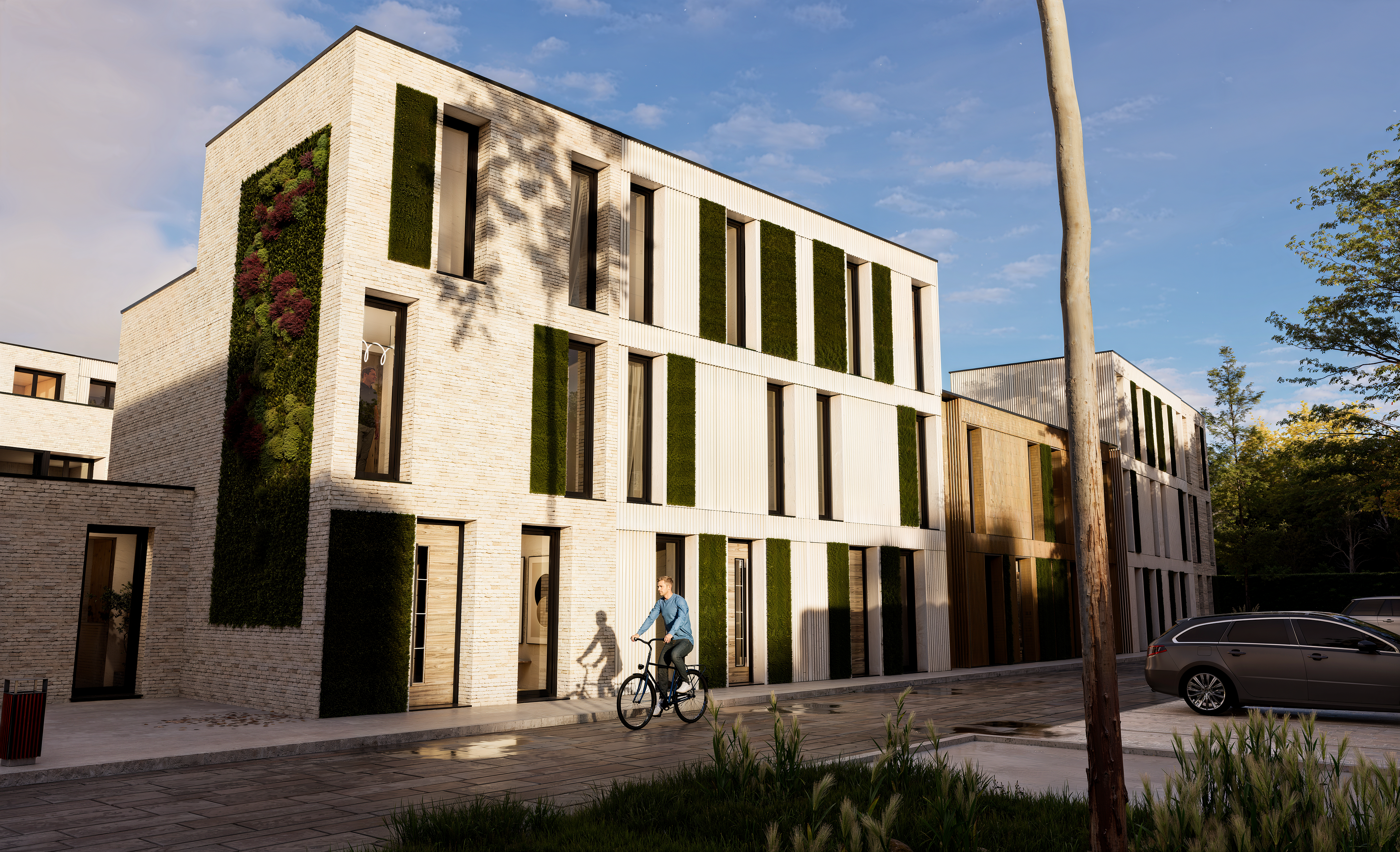
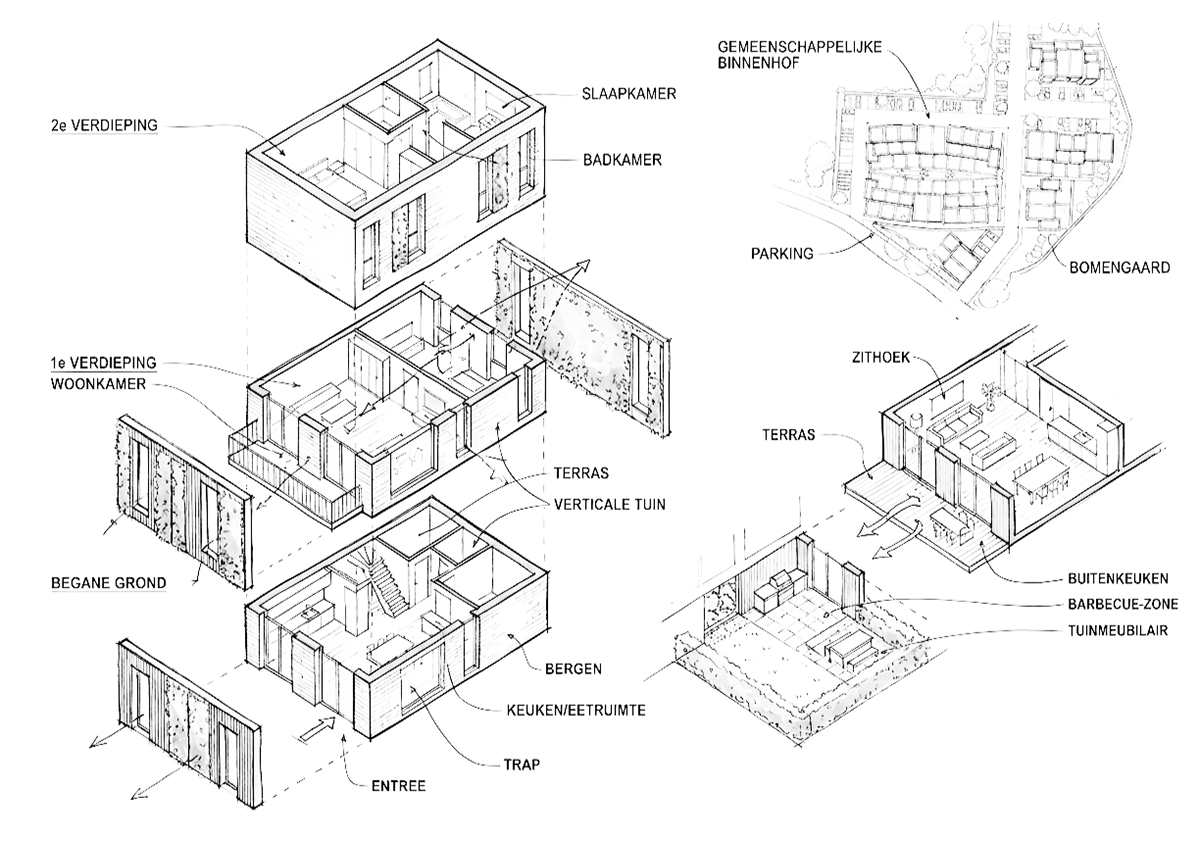
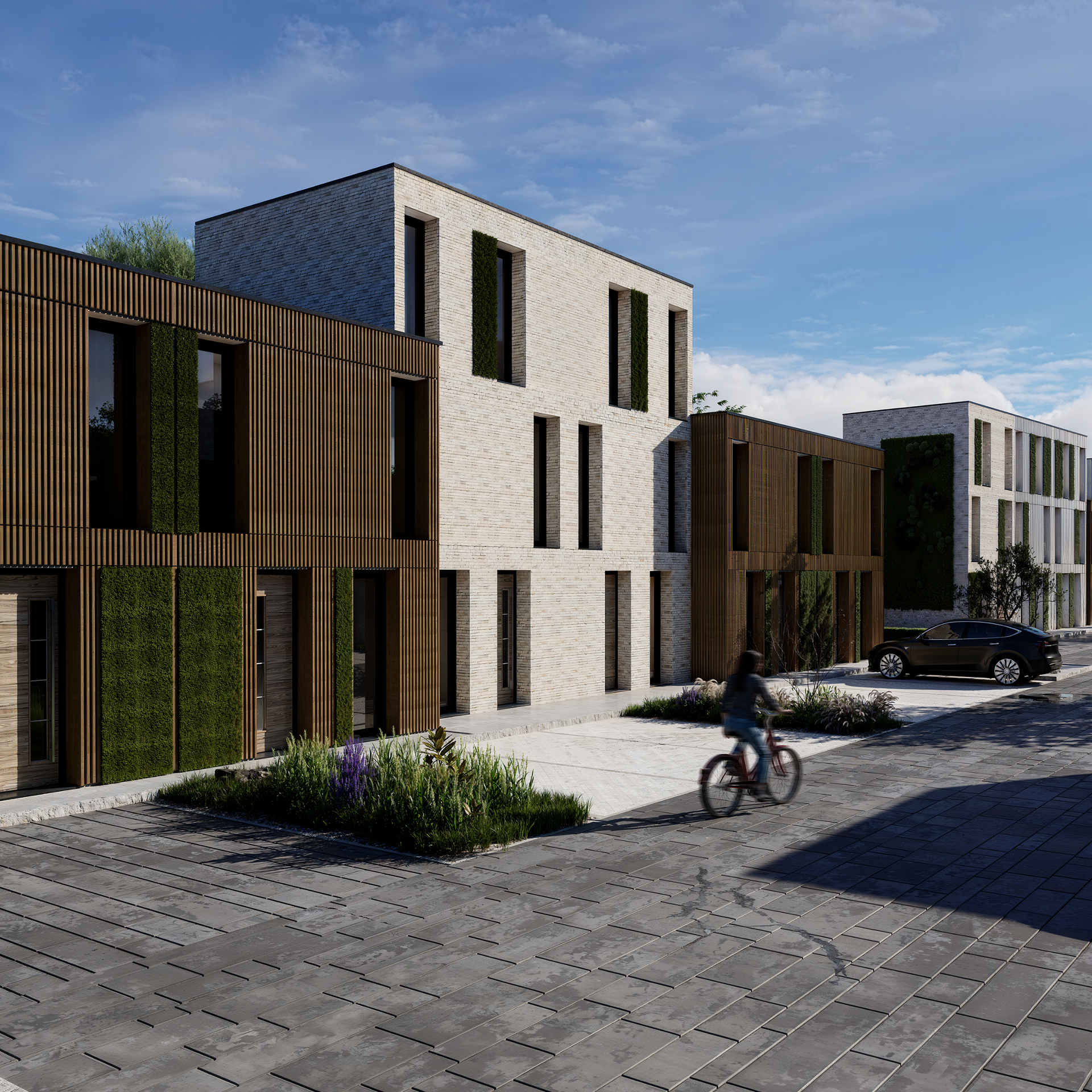
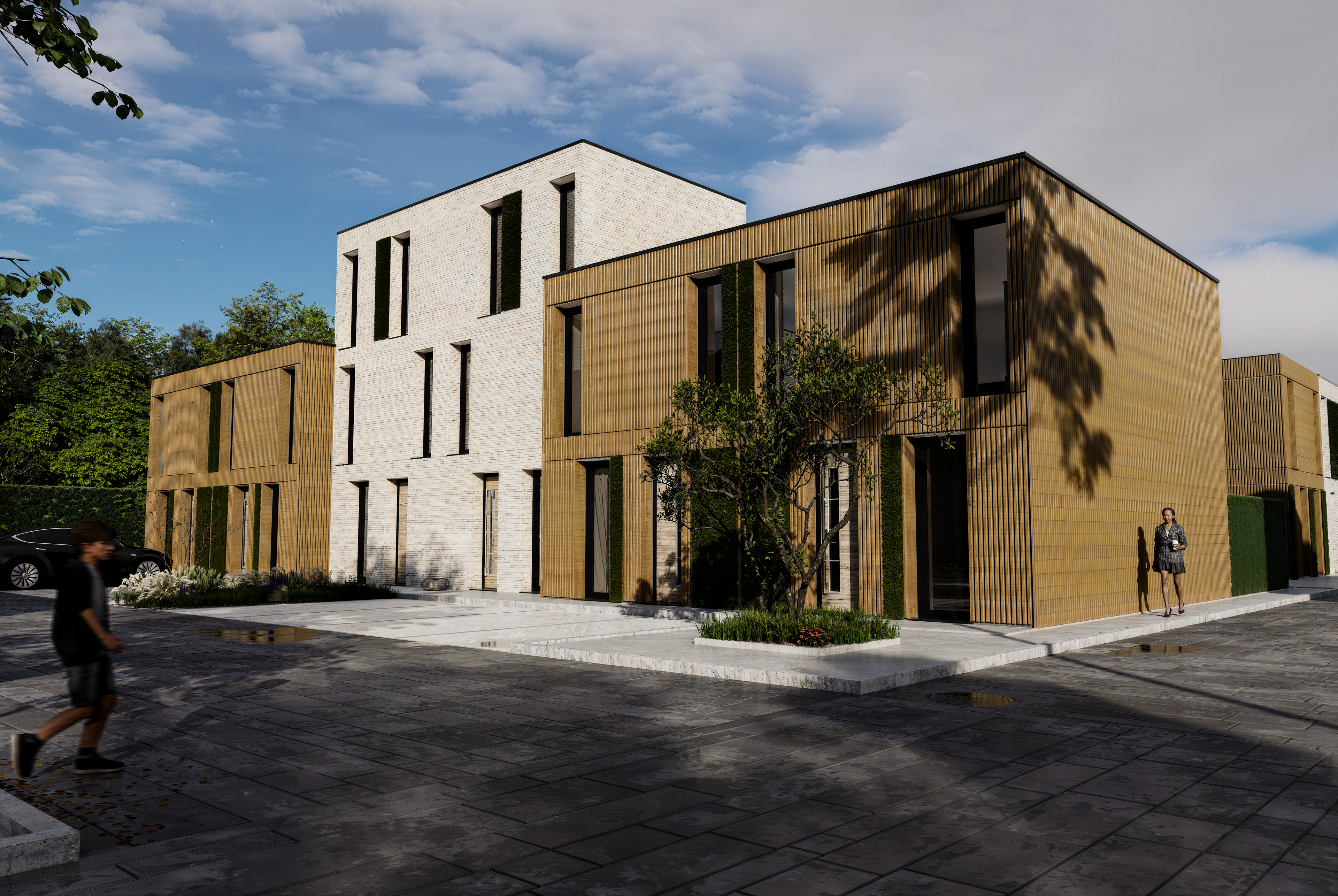
The architectural approach is based on a minimalist and reductive philosophy. In collaboration with architectural partner BuroRamakers, the design prioritises material efficiency, formal clarity, and long-term environmental performance. The buildings are composed of crisp cubic volumes with controlled proportions and restrained facade openings. Window positions are carefully designed to frame views, ensure privacy, and maintain visual balance across the development.
Shared courtyards between building blocks form a central spatial element, supporting social interaction and reinforcing a cohesive residential environment. Parking is integrated in a way that preserves the clarity and order of the overall composition.
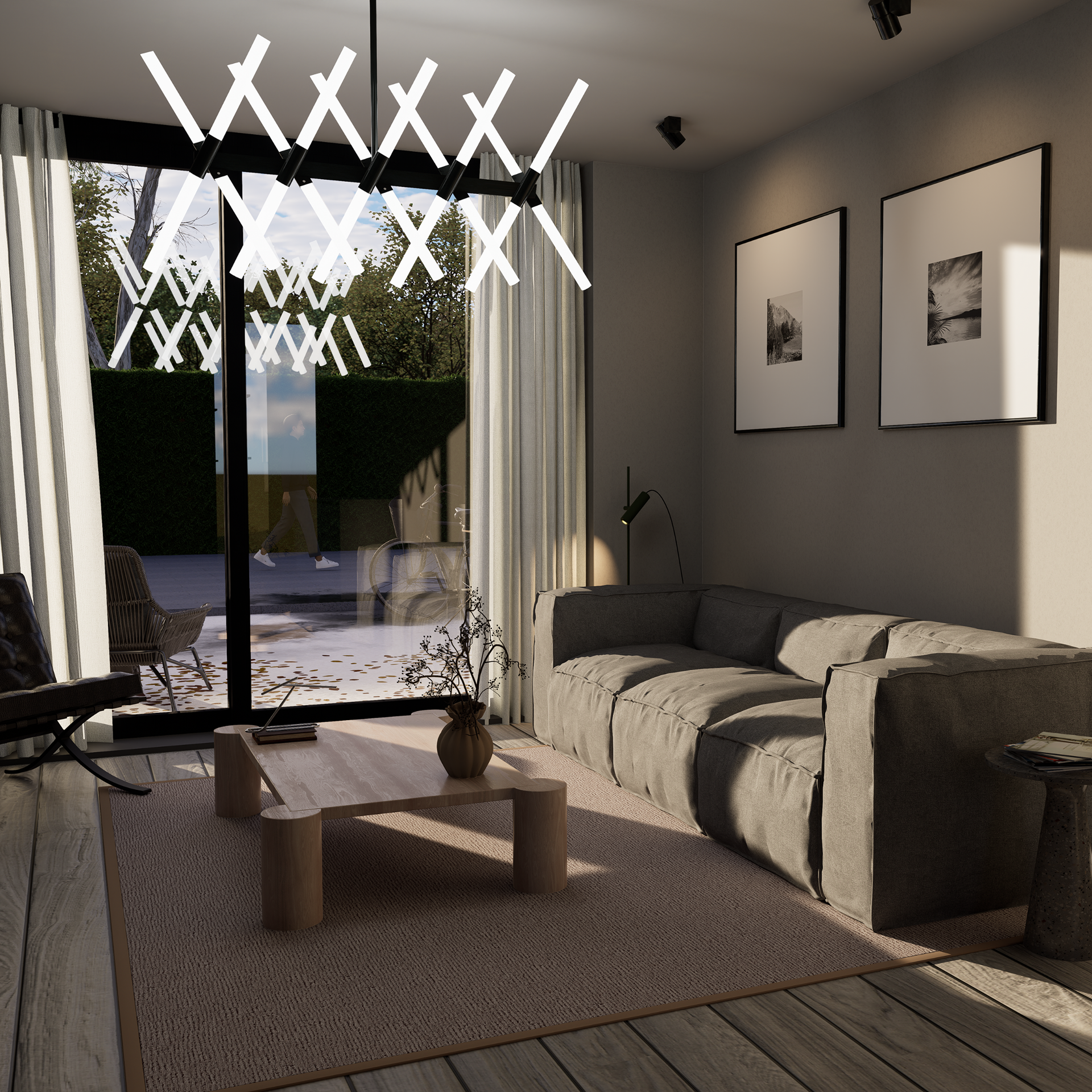
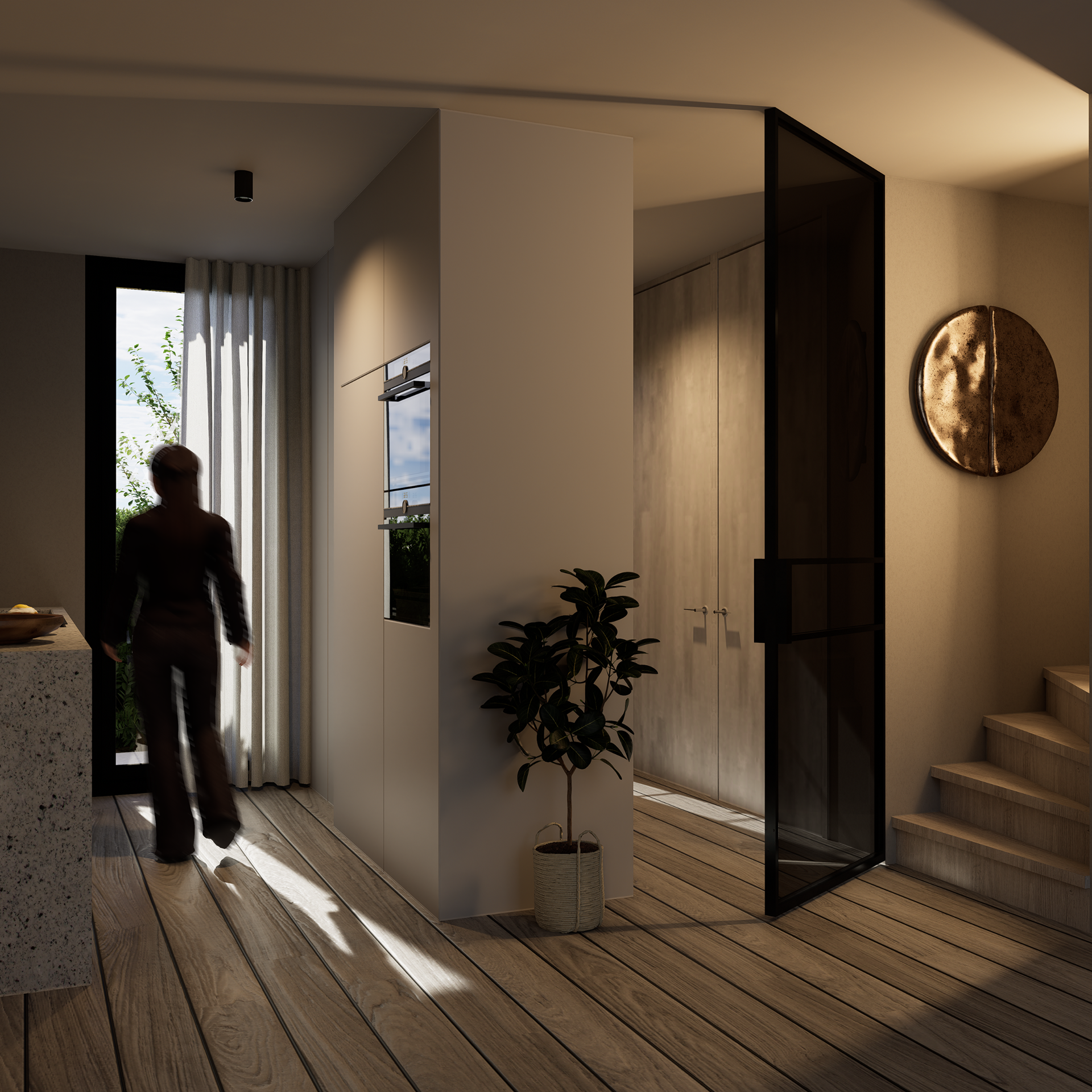
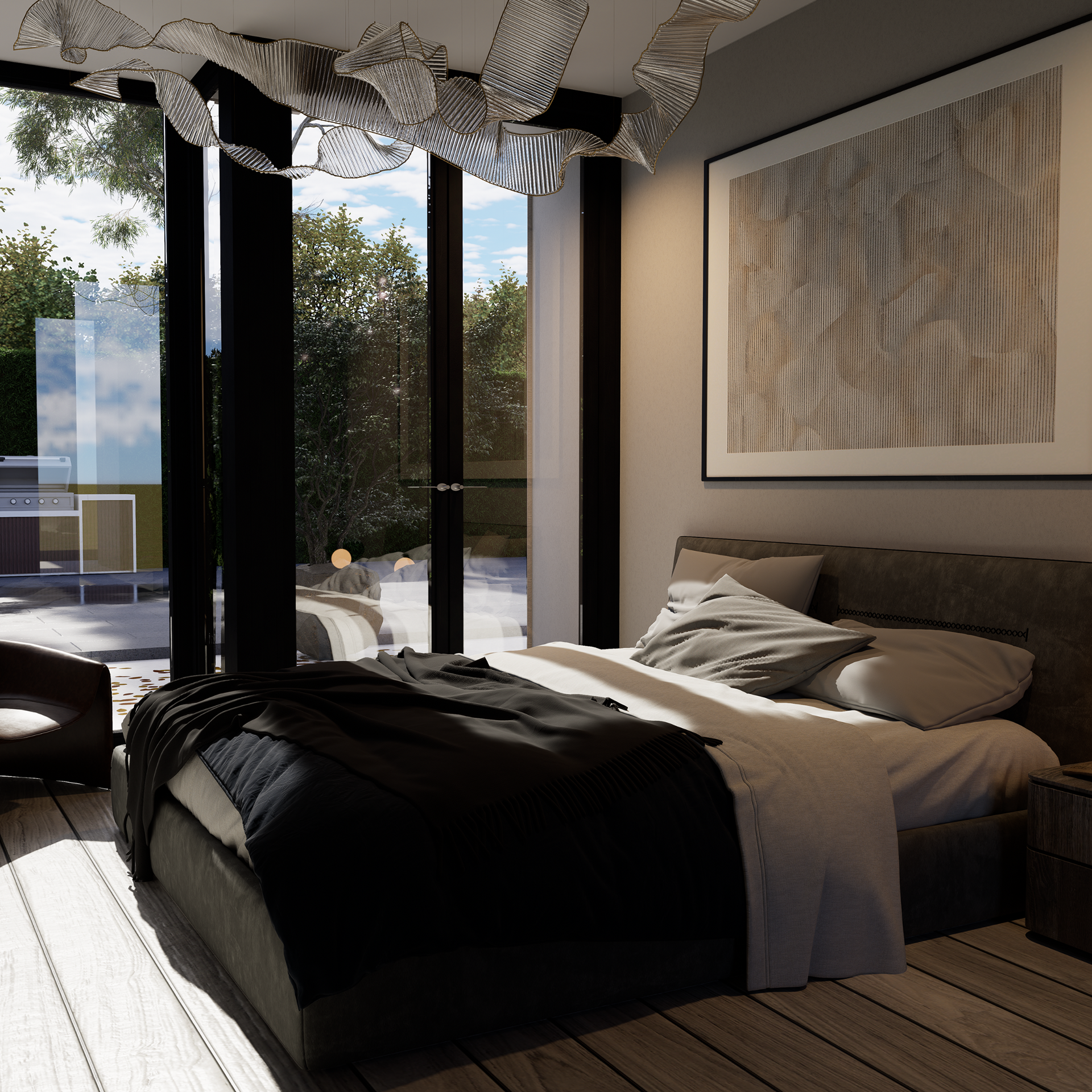
The programme targets starters and families seeking affordable owner-occupied housing in the Vaals region and its cross-border catchment area. The municipality has approximately 10,100 residents, with a relatively high proportion of elderly inhabitants and a steady flow of visitors, which directly informs the design strategy. The housing mix is designed for flexibility and accessibility, with lifetime-proof layouts, step-free access, elevator provisions, and adaptable unit configurations to accommodate different household types over time.
Sustainability is a core design principle integrated into the structure of the project. The design follows Dutch BENG standards with ambitions toward Label A and Paris Proof performance. This is achieved through passive design strategies, high-performance building envelopes, heat pump systems, heat recovery ventilation, and photovoltaic integration. A decentralized energy system is proposed to manage on-site generation, storage, and demand. A circular water strategy is also included, based on rainwater harvesting and greywater reuse for non-potable applications, reducing pressure on municipal infrastructure. Material selection follows a lifecycle carbon approach using LCA methodology, prioritizing biobased and recycled materials. The 3–30–300 green rule is applied to ensure visual access to trees, sufficient canopy coverage, and proximity to green space throughout the site.
This project also functioned as a CAPEX-focused learning process, where early design decisions were directly linked to cost, efficiency, and long-term performance. Working with the Gablok system demonstrated how prefabricated modular construction can significantly improve cost control, reduce construction time, and simplify execution. It also highlighted how structural systems influence spatial planning, unit efficiency, and architectural discipline. A key learning outcome was understanding how design decisions impact both spatial quality and financial performance. Structural logic, material selection, and energy systems were evaluated not only for architectural quality but also for their effect on lifecycle cost and adaptability. This strengthened the understanding of value-driven design where architecture, construction, and economics are integrated from the beginning.
Development Team:
Head of Design: Buro Ramakers Architectural firm - Paul Ramakers
Project Technical Architect: Alireza Farokhi
Structure and Development: Gablok Nederland B.V
Project Leaders: Michael Wassermann and Patrick Schweitzer
Head of Design: Buro Ramakers Architectural firm - Paul Ramakers
Project Technical Architect: Alireza Farokhi
Structure and Development: Gablok Nederland B.V
Project Leaders: Michael Wassermann and Patrick Schweitzer